How to Measure Speed-to-Response and Booked-Appointment Rate
If you want more booked appointments, start by measuring two things: how fast you reply to every new inquiry, and how many of those inquiries turn into a booked call. These two numbers tell you more about your follow-up than any gut feeling. This guide shows realtors, wholesalers, investors and real estate teams in New Jersey how to track both, simply and honestly.
Why These Two Numbers Matter
Speed-to-response shows how quickly a new prospect hears back from you. Booked-appointment rate shows how well your follow-up turns conversations into real meetings. One measures effort. The other measures results.
When you track both, you can see where things break. Fast replies with few bookings usually point to a message or offer problem. Slow replies point to a coverage problem, often nights and weekends.
How to Measure Speed-to-Response
Speed-to-response is the time between when an inquiry arrives and when your first real reply goes out. Keep the definition the same every week so your numbers stay comparable.
- Start the clock when the form is submitted, the call comes in or the message arrives.
- Stop the clock at your first reply that answers or asks something useful, not an empty auto-receipt.
- Track by channel. Web forms, calls, texts and social messages often have very different reply times.
- Track by time of day. Split business hours from evenings and weekends so after-hours gaps do not hide in an average.
- Look at the slowest replies, not just the average. A few very late replies can matter more than a good overall number.
Most CRMs, including the one inside AI Lead Finders, store the time a contact was created and the time of each message. That gives you what you need to calculate reply time without spreadsheets full of guesswork.
How to Measure Booked-Appointment Rate
Booked-appointment rate is the share of new inquiries that end up with a scheduled call or meeting on your calendar. The formula is simple: booked appointments divided by new inquiries, for the same period.
- Define "booked" clearly. Count a real time on the calendar, not "maybe next week."
- Use the same date range for both numbers, such as the last 30 days.
- Separate sources. Website forms, ads, referrals and past contacts often book at different rates.
- Track shows, too. A booked call that never happens is a different problem than a contact who never books.
Use Pipeline Stages to Make It Easy
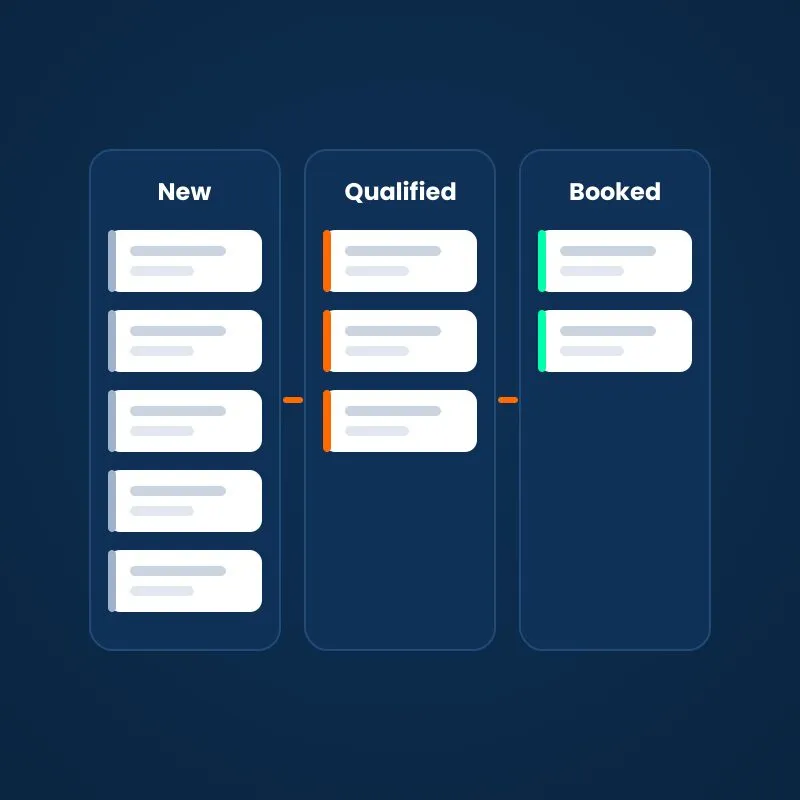
The easiest way to measure both numbers is to give every contact a clear pipeline stage. For example: New Inquiry, Contacted, Conversation, Appointment Booked, Appointment Held, and Closed. When a contact moves stages, the CRM records when it happened.
Now your report almost builds itself. Count how many contacts entered New Inquiry, how many reached Appointment Booked, and how long the move from New Inquiry to Contacted took. Use tags for source and town so you can filter by Union County, Essex County or any area you work.
Where AI Follow-Up Helps
Measuring is the first step. Improving is the second. AI follow-up can help with both.
- Instant first replies. An AI assistant can reply to new inquiries within moments, day or night, so your speed-to-response stays steady.
- Consistent questions. It can ask the same key questions every time, which makes your data cleaner.
- Calendar booking. It can offer open times and book directly on your calendar, then update the pipeline stage.
- Reminders. It can send reminders before appointments, which can help with no-shows.
One rule always comes first: text only contacts who opted in to receive messages from you, and honor STOP right away. Keep consent records with each contact. For questions about A2P registration or TCPA rules, check with your attorney.
A Simple Weekly Review
Pick one time each week, like Monday morning, and look at the same short list:
- How many new inquiries came in, and from which sources?
- What was the typical reply time during business hours and after hours?
- Which inquiries waited the longest, and why?
- How many contacts reached Appointment Booked?
- How many booked appointments were actually held?
Write down one change to test for the next week. Maybe it is a new first message, a shorter booking link, or AI coverage for weekends. Small, steady changes are easier to judge than big overhauls.
Common Measuring Mistakes
- Counting auto-receipts as real replies.
- Mixing different date ranges for inquiries and bookings.
- Ignoring after-hours inquiries in the report.
- Changing your stage definitions every month.
- Looking only at averages and missing the slowest replies.
Ready to See Your Numbers Clearly?
AI Lead Finders helps New Jersey real estate pros set up clean pipelines, compliant AI follow-up and simple reports for speed-to-response and booked appointments. Want to see how it could fit your business? Book a free strategy call and we will walk through it together.
