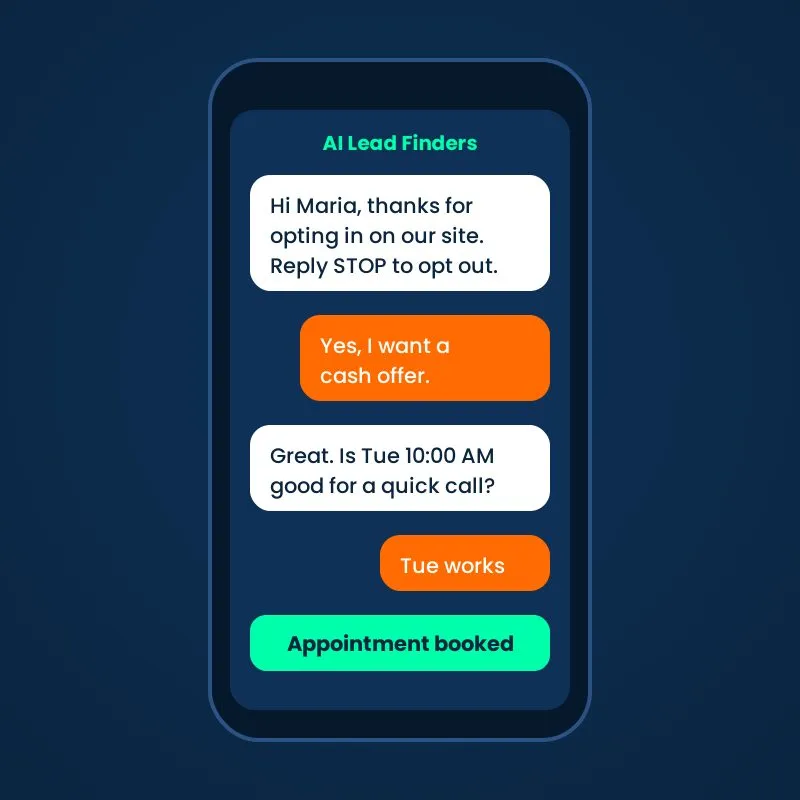
How to Write Follow-Up Messages That Sound Human
Follow-up only works if people answer. And people answer messages that sound like they came from a real person, not a script. If your texts read like a form letter, sellers and buyers tune out. The good news: writing human-sounding follow-up is a skill you can learn, and AI can help you do it at scale.
Why robotic messages get ignored
Most people can spot a template in one glance. Long greetings, stiff wording and a hard sales push all signal "mass message." When a homeowner sees that, they feel like a number. They delete it or ignore it.
A human message feels different. It is short. It refers to what the person actually asked about. It asks one easy question. It sounds like something you would type on your own phone between showings.
Start with consent, always
Before we talk about tone, one rule comes first. Only text people who opted in to hear from you, and honor STOP right away. A friendly message to someone who never gave consent is still a problem. Keep your opt-in records clean, identify your business in your messages, and check with your attorney on A2P and TCPA rules for your situation.
Seven habits of follow-up that sounds human
- Use their name and their reason. "Hi Maria, thanks for asking about selling your place in Cranford" beats "Dear valued homeowner."
- Keep it short. One to three sentences. If it would not fit on a phone screen without scrolling, cut it.
- Ask one simple question. "Is this a good number to reach you?" is easier to answer than a list of five questions.
- Write the way you talk. Use contractions. Skip jargon like "comparative market analysis" in a first text. Say "a quick look at what homes nearby sold for."
- Match their pace. If they reply with three words, do not send back a paragraph.
- Give them an easy out. "No pressure if the timing is off" lowers the stress and often gets a more honest reply.
- Space your follow-ups. A friendly check-in a few days later feels natural. Several texts in one afternoon does not.
Before and after: a quick example
Here is a made-up example to show the difference. It is not from a real client.
Robotic: "Greetings! We have received your inquiry regarding your property. Our team of experts is ready to provide a no-obligation consultation. Please reply with your availability."
Human: "Hi James, it's Ana, the agent you reached on our site. Saw you asked about selling in Linden. Are you thinking this year or just exploring? Reply STOP to opt out."
The second one is shorter, names the town, asks one question and still includes opt-out language. That is the whole idea.
Where AI fits in
Writing one good text is easy. Writing a good text for every new prospect, at 9 PM on a Sunday, is hard. That is where AI follow-up helps. An AI assistant can:
- Reply within moments to opted-in contacts using the details they shared on your form.
- Keep a consistent, friendly tone that matches your brand voice.
- Ask simple qualifying questions one at a time instead of all at once.
- Hand the conversation to you when the person is ready to talk or asks something only you should answer.
- Respect STOP and quiet hours automatically.
The key is to set it up with your own voice. Give the AI examples of messages you like, words you never use, and the towns you serve. Then review conversations regularly and adjust. AI helps you show up fast; your voice keeps it human.
A simple checklist before you hit send
- Did this person opt in, and is opt-out language included where needed?
- Does the message mention their name or what they asked about?
- Is it three sentences or fewer?
- Does it ask just one question?
- Would you be comfortable reading it out loud to them?
If the answer is yes to all five, send it.
Make your follow-up sound like you
Realtors, wholesalers and investors across New Jersey lose good conversations because their follow-up sounds canned or never goes out at all. AI Lead Finders helps you set up compliant, human-sounding follow-up that responds fast and hands warm conversations to you.
Book a free strategy call and we will walk through how your messages could sound more like you.
